January's Excise Tax Reset Barely Moves the Line West Seattle View-Home Sellers Should Watch
October 29, 2026
October 29, 2026
If you are selling a West Seattle view home and the closing could land in late December or early January, how much does the date change your excise tax bill? Washington's Department of Revenue has posted new real estate excise tax thresholds for sales beginning January 1, 2027, and every bracket edge moves up. On a $2 million Seattle sale, the difference comes to $429.
That figure is small, and so is every other figure the reset produces. The number that does cost sellers real money is the line where the state rate jumps to 2.75%. Because of how the statute adjusts its brackets, that line has barely moved since 2020, while home prices across King County have risen by nearly a third.
Washington's excise tax is graduated, so each slice of the sale price is taxed at its own rate. Under the schedule in place since January 1, 2023, the state charges 1.10% on the first $525,000, 1.28% on the portion up to $1,525,000, 2.75% on the portion up to $3,025,000, and 3% above that. For sales beginning January 1, 2027, the same four rates apply, but the edges move to $551,000, $1,551,000 and $3,051,000. The rates stay the same. A 2026 bill, HB 1983, amended the same statute to change a timberland definition and left the four residential rates as they were.
Seattle adds a local excise tax of 0.50%, which the Department of Revenue's local rate schedule effective May 1, 2026 lists for the city. DOR instructs that this local amount be added to the graduated state amount. Applying both schedules gives these totals:
| Sale price | Total Seattle REET, 2026 schedule | Total Seattle REET, 2027 schedule | Difference |
|---|---|---|---|
| $897,500 | $15,030.50 | $14,983.70 | $46.80 |
| $1,500,000 | $25,755.00 | $25,708.20 | $46.80 |
| $2,000,000 | $41,637.50 | $41,208.50 | $429.00 |
| $3,500,000 | $91,575.00 | $91,081.00 | $494.00 |
Every bracket edge moves up by the same $26,000, so the saving has a hard ceiling. A sale of any size saves at most about $494, and a sale that stays inside the 1.28% bracket saves $46.80. That bracket covers everything from $551,000 up to $1,551,000 under the 2027 schedule.
The reason sits in RCW 82.45.060. Every four years, the Department of Revenue adjusts only the bottom threshold, by the lesser of growth in the consumer price index for shelter or 5%. The upper thresholds then rise "by the dollar amount of any increase" in that bottom threshold. The adjusted figures are published by September 1, take effect the following January 1, and cannot be changed once they are in effect.
The bottom threshold can grow by as much as 5%. The 2.75% threshold is nearly three times larger but gains the same dollar amount, so it grows by a much smaller percentage. When the statute's graduated rates began in 2020, the 2.75% bracket started above $1,500,000. After two adjustments it starts above $1,551,000. That is $51,000 over seven years, or about 3.4%. Even if the bottom threshold gets the full 5% in the next few cycles, the 2.75% line will rise by less than 2% each time.
A JD Supra article by the Lasher law firm, published October 20, 2026, reports the same 2027 thresholds and notes that local rates continue to apply on top of them.
NWMLS's year-end report for 2020 put the King County single-family median for that year at $724,950. In NWMLS's September 2026 breakouts, the King County residential-only median was $949,975. One figure is an annual median and the other covers a single month, so the comparison is rough. Even so, the gap is wide. Over about the same period, the county's typical sale price rose roughly 31%, and the start of the 2.75% bracket rose 3.4%.
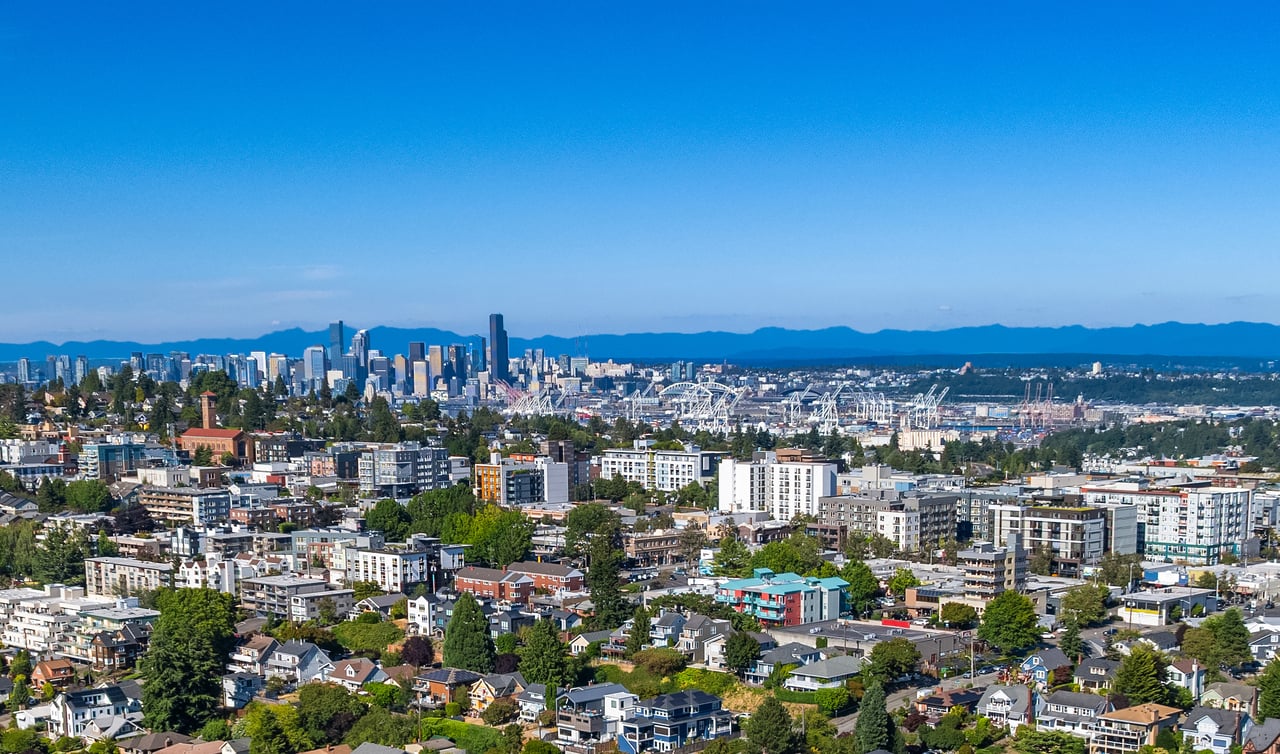
West Seattle's typical home is still well below that line. In September 2026, NWMLS Area 140, which the MLS's map index identifies as West Seattle, recorded a residential-only median of $897,500 across 82 closed sales, up 0.84% from September 2025. The same month showed 3.0 months of inventory, compared with 4.15 for Seattle overall and 4.10 for King County. Active West Seattle listings were up 12.84% from a year earlier, and pending sales were down 18.18%. The peninsula's market is still tighter than the city's, and buyers have more to choose from than they did a year ago.
The 2.75% bracket matters most at the top of that market. Sound-view houses, homes near the waterfront, and larger single-family properties on the view streets often price close to $1.5 million or above it. Because the threshold barely moves, any price growth faster than its small step-ups will carry more of those homes across it.
For a Seattle sale under the 2027 schedule, the combined state and city rate on each added dollar looks like this:
Above about $1.55 million, each additional $100,000 of sale price carries $3,250 in excise tax. Just below that line, the same $100,000 carries $1,780. For a seller comparing a sale at $1,551,000 with one at $1,651,000, every dollar of that extra $100,000 is taxed at nearly twice the rate of the dollars just below the line. The January reset moves that line by $26,000.
The line shapes what a seller keeps from the top of the price. On a view home where the last $100,000 of value comes from the deck, the window wall, or the line of sight to the Olympics, the net from that $100,000 is $1,470 lower than it would be on a home priced below the line. Scott's construction background matters here. Knowing what an improvement costs, and what share of its sale value survives commissions, excise tax and closing costs, is where pricing and prep decisions begin.
The Department of Revenue says REET is due to the county treasurer "on the date of sale, regardless of when the sale is recorded," and that penalties and interest apply if the tax is not paid within one month of the date of sale. The 2027 thresholds apply to "sales beginning January 1, 2027." Under RCW 82.46.010, local excise tax is charged as a percentage of the selling price, and DOR says the seller usually pays the state tax.
For a sale that could close on either side of the new year, the Department of Revenue's real estate excise tax page is the primary source on which schedule applies, and your escrow officer or tax professional can confirm how it applies to your transaction. This post is general information, not legal, tax or financial advice. Please confirm your own situation with the right professional before you rely on any figure here.
Do the rates change on January 1, 2027? No. The four state rates stay at 1.1%, 1.28%, 2.75% and 3.0%. Only the price thresholds move, each by $26,000.
What is the most a seller can save from the reset? About $494, on any sale above $3,051,000. A sale between $551,000 and $1,551,000 saves $46.80.
When does the bracket adjust again? The statute sets adjustments every fourth year, and the most recent threshold becomes the base for the next one. The schedule taking effect in January 2027 will apply until that next adjustment.
Does Seattle's local rate change with the state thresholds? No. The city's 0.50% is a flat percentage of the selling price, listed on DOR's local rate schedule effective May 1, 2026, and it is added to the state amount.
If your West Seattle home is likely to price near the $1.55 million line, Scott Monroe and Molly Kemper can go through your prep budget, pricing and expected net with you so you can see where each dollar of value ends up. Book a Consultation.
Stay up to date on the latest real estate trends.