Gatewood's Festival Didn't Get Canceled. It Moved to a Playground.
September 24, 2026
September 24, 2026
On the last Saturday morning in May, the playground at Gatewood Elementary filled up fast. A Seattle Fire engine idled near the fence, its crew ready to let kids climb aboard if a call didn't pull them away first. Volunteers ran a Chuck-a-Duck booth. A cupcake walk wound through the crowd. Prize tables held nothing but recycled toys, the kind a PTA squirrels away all year, dentist-office trinkets and McDonald's giveaways repackaged as carnival loot. Two food trucks, Taco Corte and Seattle Pops, worked the northwest corner of the field. QR codes for PTA donations showed up everywhere, taped to tables, stapled to banners, tucked into game booths.
This was the fourth annual Gatewood Gator Fair, and it went off exactly as planned.
Up California Ave, Morgan Junction Park sat quiet. For the first time in years, there was no Morgan Junction Community Festival this summer.
The Morgan Junction Community Festival has been a fixture of early summer for over a decade, usually landing in mid-June with live music in the park, a vendor row behind the Zeeks Pizza and Whisky West building, and appearances from acts like The Bubbleman and local folk-rock favorite Gary Benson. The Morgan Junction All-Wheels Association set up alongside youth soccer clubs and neighborhood nonprofits. It was the kind of event that didn't need much explaining to anyone who'd lived in the area more than a summer or two.
This year, the Morgan Community Association's board made a different call. According to the group's own spring 2026 meeting recap, the decision came down to a shortage of volunteer help that had been building since the previous fall. Running a festival takes people willing to plan it for months, not just show up the day of, and MoCA didn't have enough of them lined up. So the board opted to skip a year rather than run a thinner version of what the neighborhood expected.
MoCA itself hasn't gone quiet. The association still meets quarterly, on the third Wednesday of January, April, July, and October, and its spring gathering this year was notable enough on its own: it marked the first time in six years, since before the pandemic, that the group met in person at The Kenney rather than over Zoom. Members reviewed an updated design for the "skate dot" mini-skatepark planned for the Morgan Junction Park expansion and got an update on the site's EV charging lot. The infrastructure work is moving. The festival, for one year, isn't.
What's worth noticing is what MoCA did with that gap. Rather than let the summer go by without pointing people anywhere, the association's own meeting notes flagged the Gator Fair to the "greater south Morgan Junction/Gatewood area" as the community event to catch instead. One volunteer-run festival stepped back, and a different one, run out of a school rather than a park association, absorbed the attention without anyone treating it as a rivalry.
The Gator Fair has quietly built its own track record. It started small and has grown into its fourth year as a genuine neighborhood draw, still organized entirely by the Gatewood PTA and parent volunteers rather than a paid events team. This year's edition brought in West Seattle's Rhodies FC, letting kids take shots on goal between carnival games, and paired the carnival with an Urban Survival Skills Fair run by local emergency-preparedness volunteers, a pairing that only makes sense in a city where neighbors have gotten used to organizing their own readiness training. It's the same spirit Gatewood PTA volunteers have brought to their other fundraising pushes this year, with organizers pointing to district-wide budget cuts as a reason community support matters more than it used to.
The mechanics of a school carnival and a civic-association festival aren't interchangeable. One runs on PTA dues, auction proceeds, and parent labor tied directly to a single building at 4320 SW Myrtle Street. The other depended on a broader, looser volunteer base tied to a whole commercial corridor. But for a resident deciding where to spend a Saturday, the difference matters less than the fact that something was actually happening.
Gatewood was never built around a commercial strip the way the Junction or Morgan Junction were. What holds a neighborhood like this together tends to be smaller and more scattered: a school event, a church hall, a single Saturday each spring when half the block hauls furniture onto the driveway.
The Women's Clothing Swap is a good example. Each spring, once West Seattle Community Garage Sale Day wraps up, Leaps and Bounds Children's Therapy runs a clothing swap at the Westside Unitarian Universalist Congregation on California Ave SW, just south of the Gatewood line. Organizers describe the same driveways that emptied out for the garage sale filling back up with donation drop-offs a few weeks later, benefiting a local children's therapy nonprofit rather than a single family's decluttering project. It's a small event, but it's the kind that runs year after year precisely because it doesn't depend on one civic body's staffing levels.
None of this means Gatewood has more going on than it used to. It means the neighborhood's calendar has never lived inside a single organization, so when one group has a lean year, the whole thing doesn't go dark.
If you were hoping to squeeze in tide pooling this fall, the window already closed. The last daylight minus tides of 2026 at the Seattle NOAA tide station landed September 8 through 10, with the deepest low of that stretch hitting about a foot below the average low water mark early on the morning of the 8th. After that Thursday, every minus tide at the Seattle station happens after dark for the rest of the year. Anyone checking Constellation Park tide charts now is really planning for 2027.
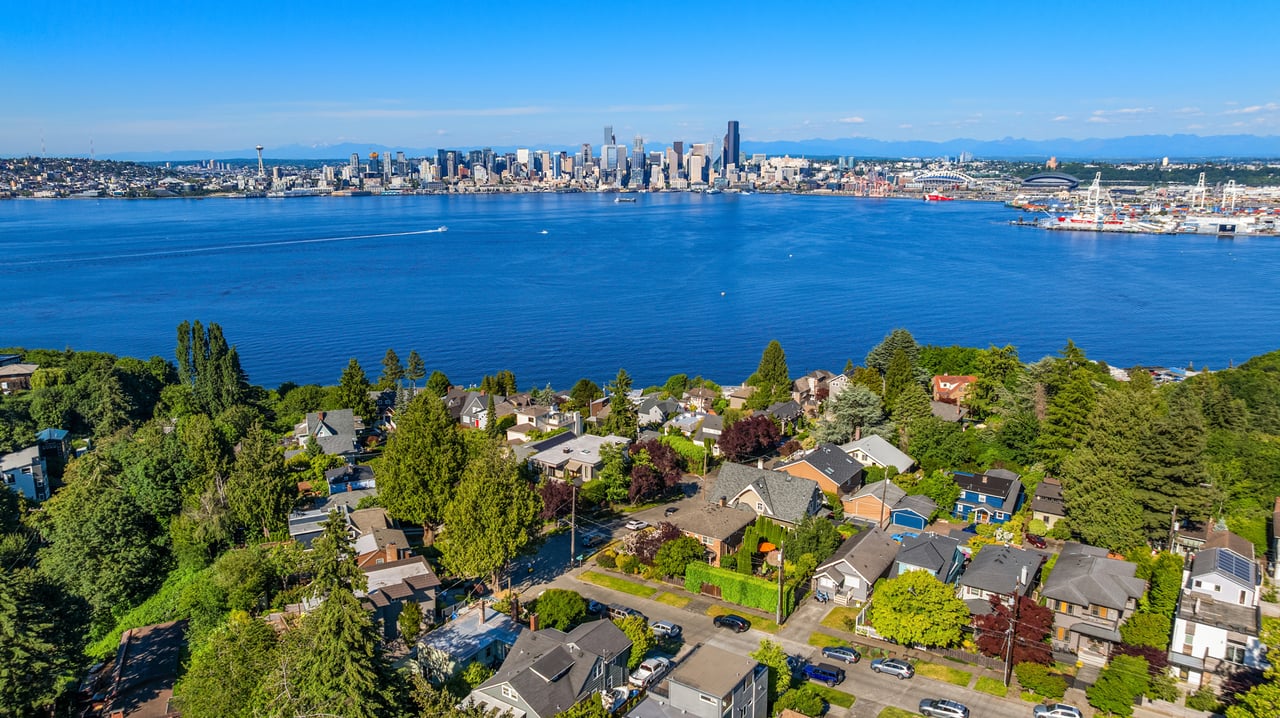
Constellation Park, officially the Charles Richey Sr. Viewpoint, sits at 3521 Beach Drive SW at the south end of Alki Point, close enough to Gatewood that it functions as the neighborhood's unofficial shoreline. The Seattle Aquarium describes two long rock lines there that hold sea stars, anemones, barnacles, and algae, best explored when the tide drops below two feet and best avoided in wet weather since the cobble underfoot gets slick. There's no parking lot, just street parking, and no restrooms closer than Alki Beach.
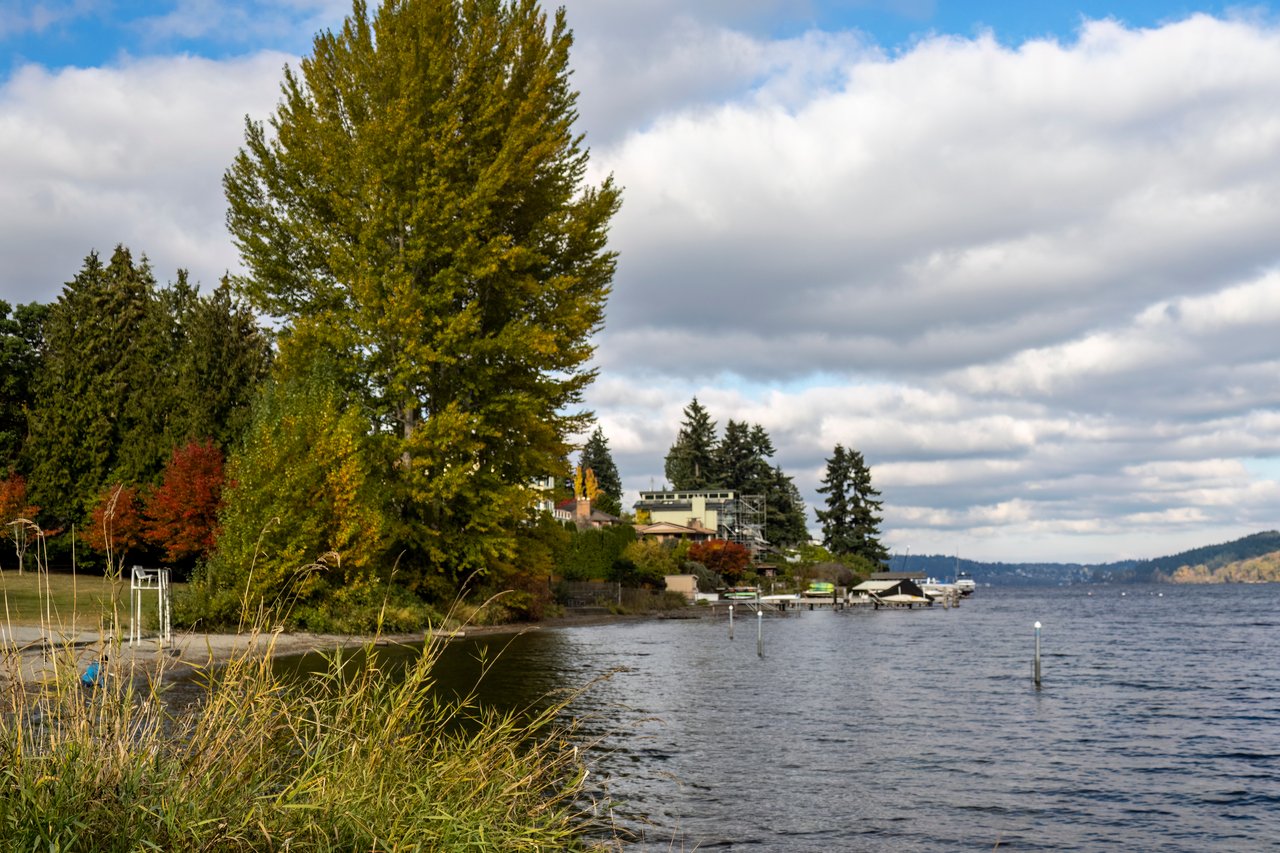
Lowman Beach Park, the quieter option a short walk from Gatewood's western edge, has changed shape more recently than most residents probably registered. The final stretch of seawall and an old tennis court there came out in 2022, part of a restoration that let the beach return to something closer to its natural slope and daylighted a remnant of Pelly Creek that had been buried for decades. What's left is a lawn for gathering, swings, and sunset views toward the Olympics, Alki Point, and Williams Point, all without the crowds that show up at Alki proper on a summer weekend.
None of these threads point to a single answer for what makes Gatewood work. That's the point. This is a neighborhood that never had one gathering spot to lose, so when a park association takes a breather, a school carnival fills the gap without anyone having to declare a winner. When the tide calendar closes out one season, a church basement clothing swap and a garage sale weekend are still running on their own schedule. The infrastructure holding daily life together here isn't concentrated in any one institution. It's distributed across a playground, a park board, a nonprofit, and a shoreline that keeps its own time regardless of what anyone plans around it.
If you're already living in Gatewood, none of this changes what your Saturday looks like. But if you've ever wondered why the neighborhood feels steady even in a year when one of its longest-running traditions goes quiet, this is most of the answer.
If a friend or family member is weighing a move into West Seattle and wants a read on what a specific block actually feels like day to day, that's the kind of question Monroe Kemper fields often. Reach out to book a consultation whenever the timing's right.
Stay up to date on the latest real estate trends.