Genesee Hill Doesn't Have a Main Street. It Runs on Three Parks and a School.
September 17, 2026
September 17, 2026
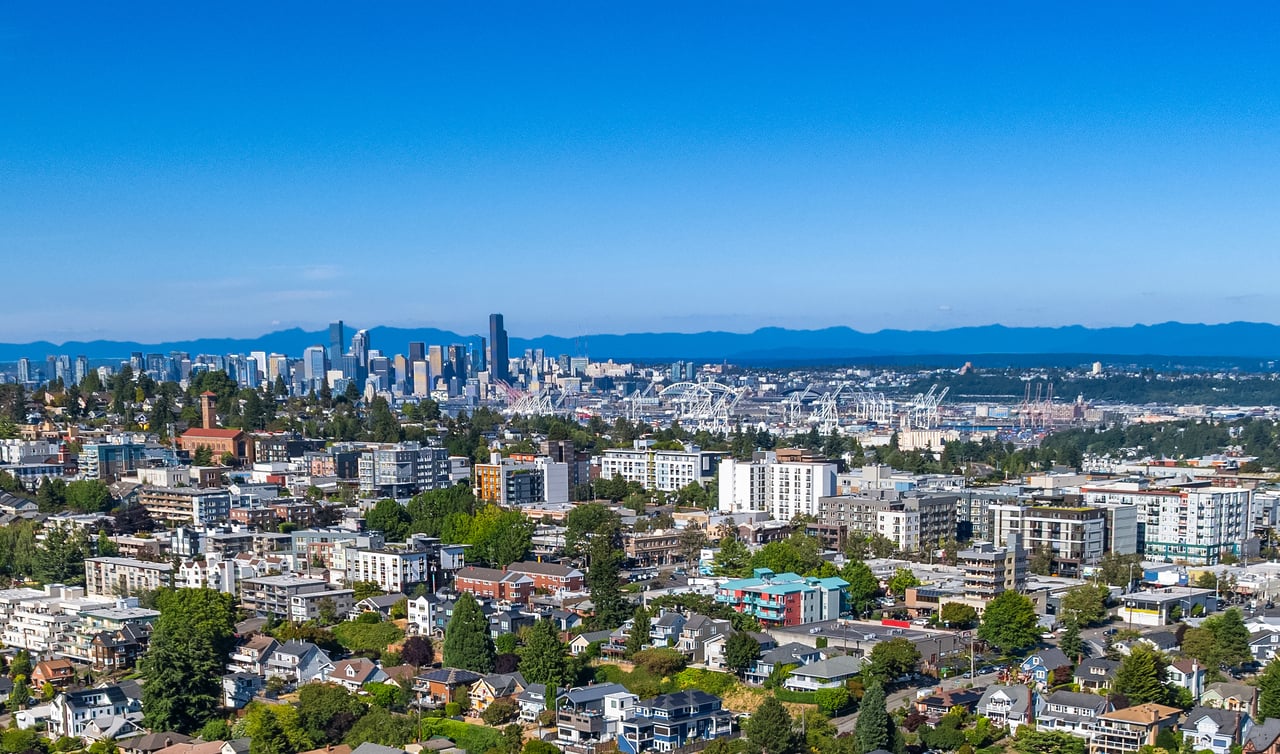
Why does a neighborhood with no real commercial strip, no cluster of restaurants advertising a "dining district," and no obvious town square still feel like one of the most cohesive pockets of West Seattle? Ask anyone who has lived on the hill above Alki for more than a season and the answer isn't a street name. It's a short list of public land: a century-old forest the city can't touch, a half-acre playground the neighbors fought to keep messy, and a ballfield currently getting torn apart and put back together.
That's the actual shape of Genesee Hill. Not a commercial core with residential streets radiating out from it, the way the Junction works. A residential neighborhood where three pieces of public property, plus one elementary school, do all the work a Main Street would normally do somewhere else.
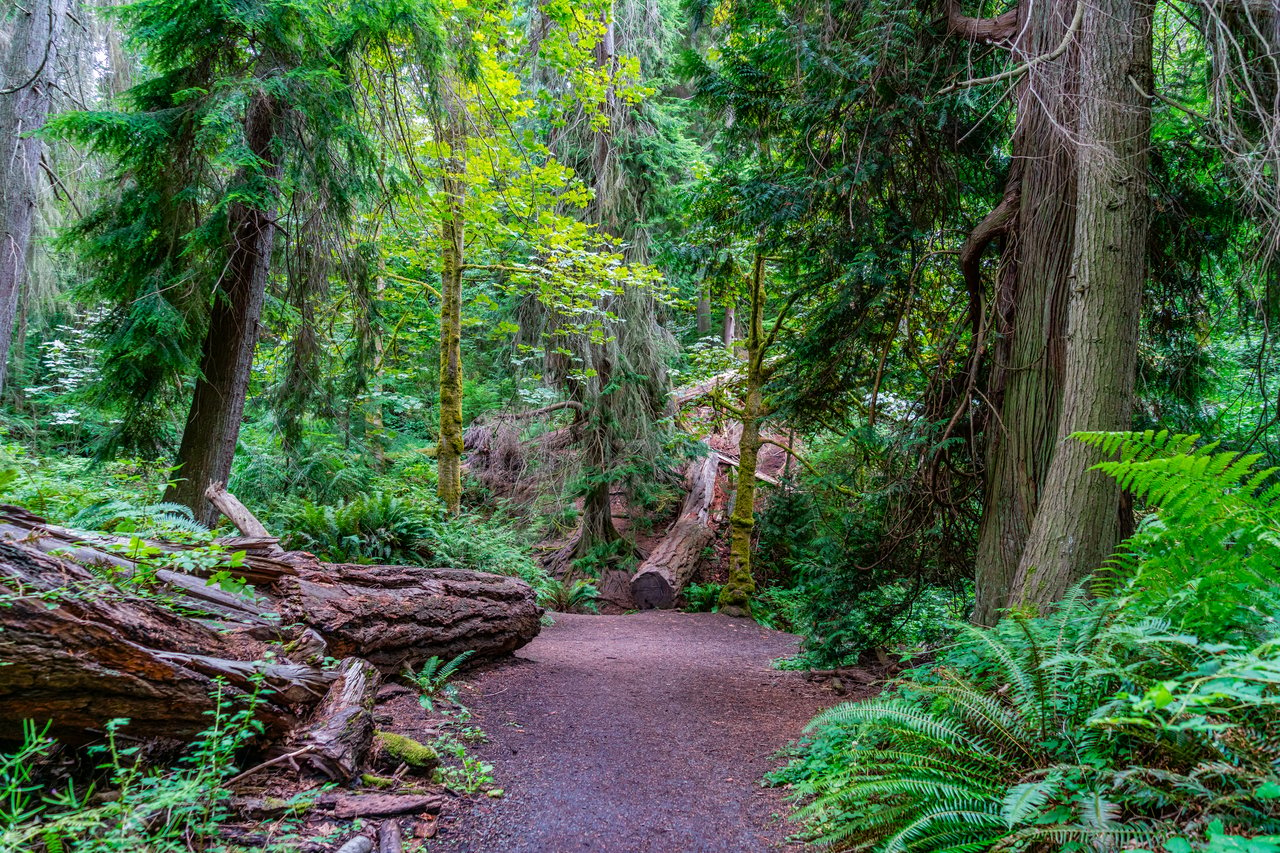
Start at the north edge of the neighborhood, where the ground drops into a ravine that Genesee Hill shares with Admiral. Schmitz Preserve Park sits there, a stretch of old-growth forest donated to the city in pieces between 1908 and 1912 by Ferdinand and Emma Schmitz. Ferdinand served on the parks commission at the time and watched the forests around Seattle disappear lot by lot. His solution was to give the city land on the condition that it stay wild. The deed said the preserve should remain undeveloped, and more than a century later that's still exactly what it is: no ballfields, no playground equipment, just 1.7 miles of trail winding through trees old enough that some of the stumps still show the notches loggers cut for their springboards.
That permanence isn't just historical trivia. The Washington Trails Association has sent volunteer crews into Schmitz Preserve in 2026, continuing work it also did there in 2019 and 2017, and West Seattle Blog listed a free public guided tour of the preserve this spring, meeting at 5463 SW Stevens St. People who live near the park treat those maintenance windows the way other neighborhoods treat a farmers market opening weekend. It's the one piece of ground in Genesee Hill where the city's job is not to plan anything, only to keep the trail passable.
A different kind of public land sits at the corner of 48th Avenue SW and SW Alaska Street, just west of the Junction. Ercolini Park is barely half an acre, purchased by the city in 2005 and developed through a state parks grant specifically because there was no other park within a mile of that spot. It's small by design. What makes it distinct is what happens on the grass.
Parents in the area have made a habit of leaving toddler bikes, push cars, and sand toys at the park for other kids to use, a loose lending library made of plastic instead of books. At one point, neighbors living closest to the park asked the city to clear the toys out, and the city did. The West Seattle Moms Group pushed back, and the toys reappeared within the week. Ercolini has stayed a park where informal community habit overruled an official cleanup, and it still runs that way.
A half-acre lot with no restroom and no sports field somehow generates more organized neighborhood defense than most parks ten times its size.
If you're picturing what's actually there, it's not complicated:
Head a few blocks further and you hit Genesee Playfield, the third piece of the trio and the one currently under construction. Seattle Parks has a project in motion to replace the field's existing restroom along with the surrounding walkways and accessible parking stalls, bringing them up to current safety and accessibility standards. The play area itself is staying in place, with only minor repairs to equipment and fresh safety surfacing, according to a project update Seattle Parks posted this spring.
So if the restroom near the ballfields looks half rebuilt this fall, or the walkway leading up to it is roped off, that's not neglect. It's a capital project moving through the city's normal pipeline, and residents scheduling fall soccer practices or weekend pickup games should expect the usual disruption that comes with any restroom-and-walkway replacement: a porta-potty standing in for a few months, a gravel path where concrete used to be. It's the least dramatic of the three spaces, and also the only one where the city is actively changing something rather than preserving it or getting overruled on it.
Genesee Hill Elementary rounds out the list, and it's not incidental that Wikipedia's own boundary description of the Genesee neighborhood names the school and Ercolini Park in the same breath as its defining features. The current building opened in 2016, but the community rituals built around it run independent of the building itself.
Twice a year or so, the school PTA runs a Restaurant of the Month fundraiser, where a local spot agrees to donate a cut of sales for a day or two. One recent round had Mission Cantina donating 20 percent of everything it sold over a weekend, including its take-and-bake enchilada kits, with the school encouraging families to order directly by phone rather than through a delivery app so the restaurant kept more of the money. Every spring, the school also runs a Bike, Walk, and Roll to School Day, with kids converging from every direction on the parking lot along Dakota Street between roughly 7:20 and 7:45 in the morning, parents posting reminders on neighborhood boards to watch for the extra foot and bike traffic.
None of that requires a commercial district. It requires a school building willing to function as one.
Genesee Hill isn't without commerce, it's just concentrated instead of spread out. Along Genesee Street and the edge of California Avenue, a short run of small businesses does the job a bigger strip would do elsewhere: Buddha Ruksa serves Thai food out of a space known for its calm, uncluttered decor. Seattle Fish Company, a family-run fish market, is where people go for fish and chips they'd otherwise have to drive to the water for. Shadowland covers the rest, functioning as the neighborhood's default answer for a casual dinner, drinks with friends, or live music on a weekend night. Olympia Coffee Roasting and West Seattle Work Shop fill in the retail side, one for espresso and pastries, the other for vintage and modern clothing and home goods. New apartment construction near the Alaska and California junction sits alongside a commercial footprint that has stayed small on purpose.
Put it together and the pattern is hard to miss. Two of Genesee Hill's three defining public spaces exist in their current form because residents, not planners, decided what they should be: a forest kept wild by a century-old deed, a playground kept scruffy by neighborhood insistence. The third is the one place where the city is visibly at work right now, replacing a restroom and a walkway most people won't think twice about until they need them. A school two blocks away turns fundraiser nights and a spring bike day into the kind of connective tissue other neighborhoods get from a coffee shop counter.
That's the actual answer to why Genesee Hill feels whole without a Main Street. It never needed one. It built its sense of place out of land the city couldn't develop, land the city tried to tidy up and got told no, and land the city is currently improving in the background while everyone keeps walking their dogs and running their errands around it.
If you're weighing what a home near Schmitz Preserve, Ercolini Park, or Genesee Playfield would actually mean for daily life, or you're already living here and thinking about what comes next, the #1 real estate team in West Seattle - Scott Monroe and Molly Kemper - at Monroe Kemper knows this hillside block by block. Book a Consultation whenever you're ready to talk specifics.
Stay up to date on the latest real estate trends.