Why North Admiral Stays Small While The Junction Grows
August 13, 2026
August 13, 2026
The chalkboard outside Admiral Pub still had last week's bingo winners written in the corner when I walked past on a Tuesday morning, dog-walkers already three deep on the Palm Avenue sidewalk with their coffees from wherever they'd stopped on the way. Nobody was in a hurry. Nobody needed to be. That unhurried quality is not an accident of North Admiral. It is the result of a neighborhood that has, again and again, chosen to stay small rather than compete with the commercial muscle of its neighbor a few blocks south.
That choice has a name, and it happened this year.
In June 2026, West Seattle Blog reported that The Summerland, a yoga studio that had been operating out of North Admiral, was relocating to a space at 4411 California Ave SW in the Alaska Junction. The move followed a flood that forced the studio to close its original doors. Founder Avian King described the new Junction space as twice the size of the original Admiral location, with natural light and higher ceilings the old spot didn't have room for.
Read that story two ways. The obvious one: a beloved local business had a setback and found a bigger home. The less obvious one, and the one that actually explains North Admiral: when a successful, growing business here needs more square footage, it doesn't expand within North Admiral. It moves to one of West Seattle's Junctions, because they are built to absorb that kind of growth.
That's not a knock on North Admiral. It's the whole point. The Admiral Neighborhood Association describes its own commercial core as "small" and "thriving," not sprawling. That word choice matters. North Admiral isn't trying to be a bigger commercial district that just hasn't gotten there yet. It's a neighborhood that has decided its retail footprint should stay walkable, familiar, and finite, even if that means the businesses that outgrow it eventually leave for somewhere with more room to stretch.
Here's the detail that confirms it. In 2025, JLL Capital Markets brokered the $35.4 million sale of Admiral Junction, the 67,992-square-foot shopping center that anchors this stretch of California Ave SW. A 60,876-square-foot Safeway makes up nearly 90 percent of that leasable space. The remaining slice, just over 7,100 square feet, holds a Menchie's and a Verizon store.
That ratio tells you what North Admiral's commercial center is actually for. It isn't a discretionary-spending strip built to pull people in from other neighborhoods. It's an errand-running center built around one grocery anchor, sized for the people who already live within walking distance. Compare that to the Junction, where Summer Fest alone drew an expected 50,000 people to a three-day festival this July. North Admiral was never going to build toward that kind of draw, and the shopping center's own lease mix shows it wasn't trying to.
None of this means North Admiral is quiet in the way "sleepy suburb" implies. It's quiet the way a place is when its rhythms are built around people who already know each other's names. A few of the fixtures:
None of these are things you'd travel across the city for. That's exactly the point. They exist for the people already here.
The Admiral Theater, at 2343 California Avenue SW, has been showing first-run movies in North Admiral for decades, and it's listed on the National Register of Historic Places. Whatever comes to the marquee this month plays on a limited number of screens to a neighborhood crowd, which is a different business model than a stadium-seating chain competing for regional ticket sales. That the theater is still running, still recognized, and still the kind of place people mention when they describe why they like this stretch of California Ave, is more evidence for the same pattern. Staying small here has not meant staying irrelevant.
This is where the contrast is easiest to see side by side.
The West Seattle Junction Association's Summer Fest ran July 10 through 12 this year, its 44th edition, with a lineup that included local acts like Alien Crime Syndicate and True Loves across a Main Stage and a second stage called the Big Dark Corner, plus a beer garden, a kids zone with inflatables, and a new zero-waste initiative requiring reusable serveware from every food vendor. The festival organizers expected more than 50,000 people to move through the Junction over those three days.
North Admiral's own community calendar looks nothing like that, on purpose. This summer's slate, published by the Admiral Neighborhood Association, ran through a Kids Parade on July 4, three Thursday evenings of Admiral Music in the Parks in mid to late July, National Neighborhood Night Out on August 4, and now points toward an Admiral Block Party Preview on August 21 followed by the Block Party itself on August 22. There's no festival branding, no headliner announcement, no expected attendance figure in the tens of thousands. It's a block party, in the literal sense: a couple of blocks, an evening, and the neighbors who already live on them.
Neither model is better. They're built for different jobs. The Junction's festival is designed to pull people in from outside. North Admiral's calendar is designed to give the people already inside a reason to step out of their houses and see each other.
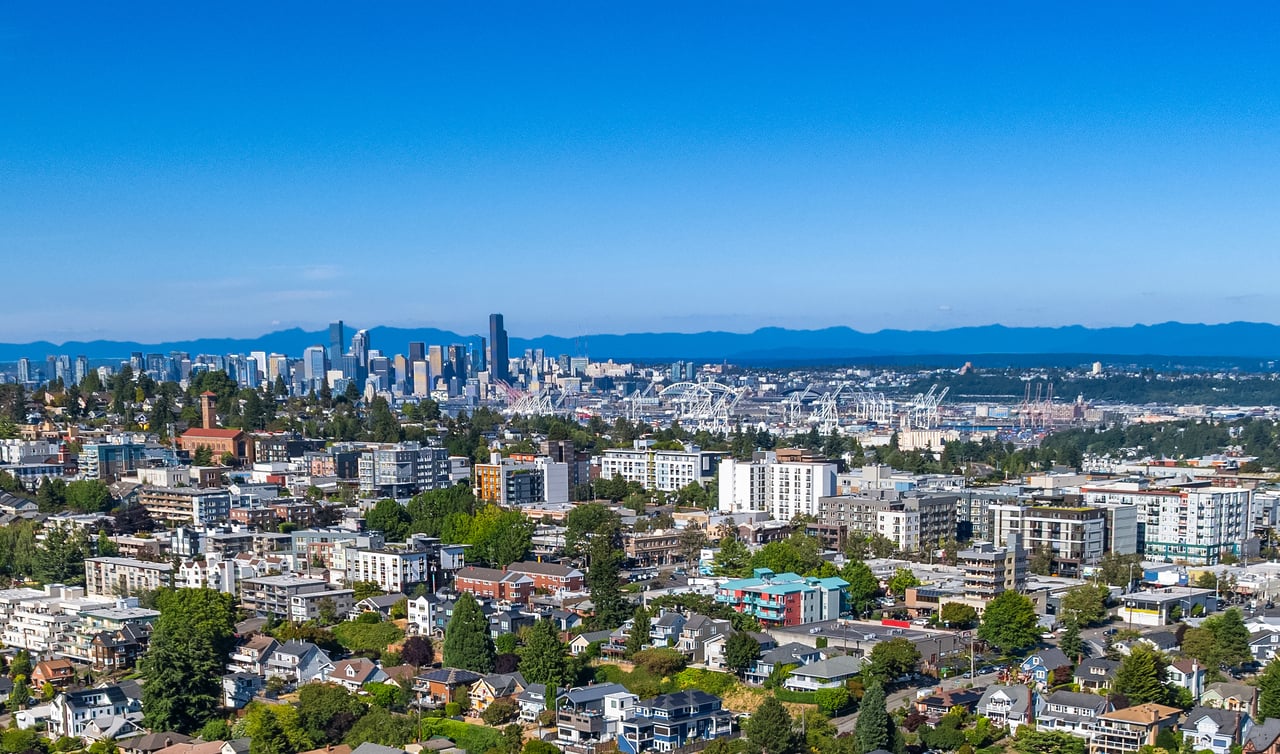
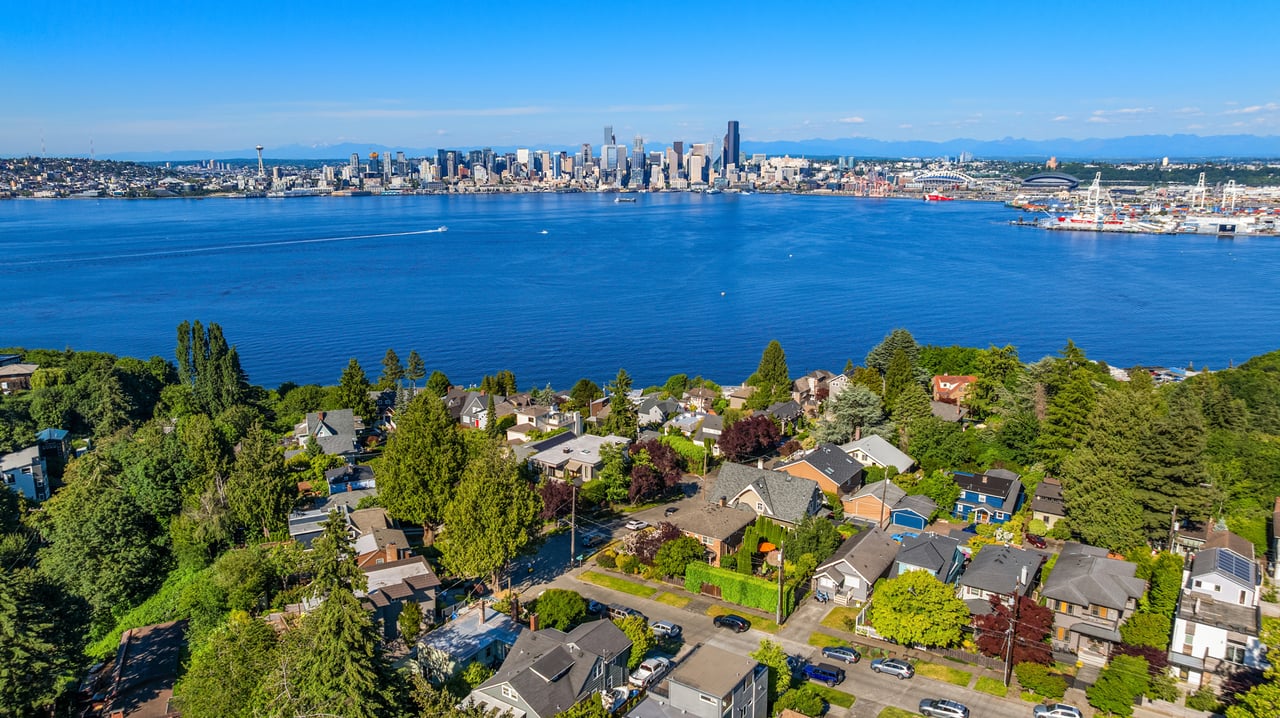
North Admiral is, by most accounts, the oldest neighborhood on the West Seattle peninsula, connected in the early 1900s to the rest of Seattle by ferry and cable car before the bridges and roads that link it today. That history shows up in the housing stock, Craftsman bungalows and Tudor Revivals on tree-lined streets, but it also shows up in the neighborhood's ongoing preference for staying compact. A hundred years of being the small, walkable district on the bluff, rather than the commercial center of the peninsula, has produced a place that still runs on the same logic: keep the grocery store close, keep the bar and the theater and the park inside walking distance, and let the bigger stuff happen a few blocks south in the Junction.
If you live in North Admiral, none of this is a surprise. You already know which bartender runs bingo night, which trail in Schmitz Park you take when you only have twenty minutes, and which weekend in August you've circled for the Block Party. What might be new is seeing the mechanism behind it laid out plainly: this neighborhood isn't a smaller, less-developed version of the Junction. It's a different kind of place entirely, one that keeps choosing to stay that way even when a good local business, like The Summerland, eventually outgrows it.
If you're weighing what a neighborhood like this means for your own next move, whether that's a first home, a move-up purchase, or a property built around exactly this kind of walkable, small-scale living, the team of Scott Monroe and Molly Kemper knows North Admiral's streets, homes, and rhythms well enough to help you figure out if this is the right fit. Book a consultation when you're ready to talk specifics.
Stay up to date on the latest real estate trends.