Why Seaview's Skatedot Keeps Moving and Its EV Chargers Don't
September 3, 2026
September 3, 2026
"We will share an update with you by the end of August." That's the line Seattle City Light gave West Seattle Blog in July about the electric-vehicle charging lot going in at 4118 SW Morgan, on the site of an old substation kitty-corner from West Seattle Thriftway. If you live in Seaview, the deadline in that sentence has just passed. The end-of-August update deadline follows earlier targets for the project.
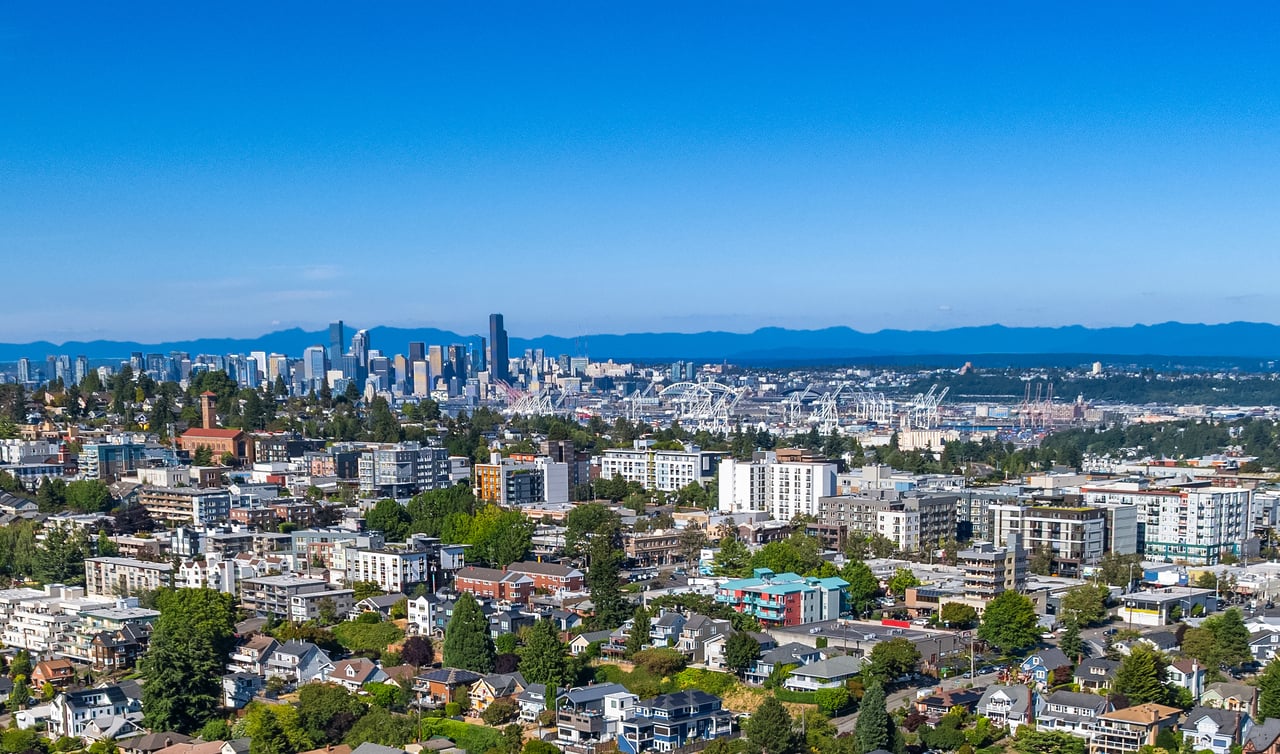
Seaview sits on California Ave SW between the Alaska and Morgan Junctions, close enough to both that a walk for coffee at C&P or milk at Thriftway means passing the construction and fencing at Morgan Junction Park, a short walk south of the neighborhood's own corner. This year that walk has passed three different civic projects moving at three very different speeds, and the gap between them says something about how anything actually gets built in this pocket of West Seattle.
The easiest one to see is the grass. Seattle Parks and Recreation bought a .47-acre lot next to the existing Morgan Junction Park back in 2014, with an original project budget of $6.36 million. The pandemic put the whole thing on hold in 2020. It restarted in 2023, ran into soil contamination left behind by a former mini-mart and dry cleaner, and finally opened as a hydroseeded lawn for interim public use when the fencing came down on April 29, 2026. Permit review and final design continue through this fall, with Phase II construction not expected to start until late summer 2027. In 2025 the city added $1.2 million to get the main project this far, bringing the total budget to $7.56 million.
Then there's the skatedot, a small skate feature planned for a corner of the existing park, championed for years by a group of neighbors who call themselves the Morgan Junction All-Wheels Association, or MJAWA. At the end of 2025, Seattle City Council approved a separate $700,000 Council Budget Action earmarked specifically for the skatedot, structured so that money would not compete with the rest of the park's budget or timeline. Design consultant Zack Thomas of Board & Vellum and skatepark designer Grindline Skateparks have been working the schematic with MJAWA through the spring, and in May, Seattle Parks project manager Trae Yang told a room at The Kenney,
"I feel I have momentum."
Then there's the charging lot. Announced in 2022 with a hoped-for completion within a year, it broke ground in February 2026, four years after it was first promised. By June, a construction moratorium tied to the FIFA World Cup and tougher-than-expected site conditions had already pushed past the original August target. By July, Seattle City Light had found a "significant structural design issue" on top of that, and issued the promise that was due by the end of August. Unlike the skatedot, there's no named group of neighbors showing up to meetings for the charging lot. The record of what's happening is Seattle City Light's own statements to a local news blog, followed by neighbor comments underneath asking why eight chargers and some conduit are taking four years.
Money that has to share a pot with everything else in a decade-old capital project moves at the speed of that project. The park's Phase II construction, still funded out of the shared $7.56 million budget, is not expected to break ground for another year. The skatedot can move on a separate track while the rest of the park addition, including its stormwater plans and drainage requirements, continues through its own process.
The charging lot has a different funding structure: it is funded entirely through Seattle City Light's own capital program, separate from the park's budget.
The Morgan Community Association offers a smaller example of local involvement. MoCA didn't hold its usual community festival this year because the board couldn't find enough volunteers to run it. The festival's absence illustrates how volunteer participation can affect whether a community event takes place.
None of this is theoretical if you live in Seaview, because some of it is already usable. The lawn at Morgan Junction Park has been open since late April, and it will stay open through next summer before the fences go back up for Phase II. It's the kind of open, unscheduled green space that didn't exist on that block two years ago.
Lowman Beach Park has had its own construction season. King County's Wastewater Treatment Division began replacing valves at the Murray Pump Station in early May as part of the Murray Force Main Rehabilitation, with work running along Beach Drive SW on weekdays through the summer. The sidewalk and beach stayed open the entire time, with road and park restoration slated for this fall and early winter.
The calendar around here has kept its own rhythm regardless of what's poured in concrete. The West Seattle Art Walk runs every second Thursday from 5 to 8pm, with more than 20 bars and restaurants between the Admiral District and Morgan Junction offering something special that night. Gatewood Elementary held its Gator Fair on May 30. And on August 15, more than 400 neighbors gathered at Morgan Junction Park for Quake, Rattle & Roll, a citywide emergency-preparedness exercise that only set up in four hub locations this year, Morgan Junction among them alongside Roosevelt, Madison Valley, and Rainier Beach.
The charging lot's timeline and the skatedot's progress are two developments to follow. MoCA meets every three months on the third Wednesday, and its meetings are open to anyone interested in neighborhood budget decisions.
We watch this corridor closely because it's the walk our clients and neighbors take every week, and because funding, timelines, and neighborhood involvement all shape what changes on the ground. If you're curious what any of this means for property near California Ave SW, or you're weighing a move within Seaview or one of the neighborhoods around it, Scott Monroe & Molly Kemper of Monroe Kemper is always glad to talk through what's actually changing on the ground. Book a Consultation whenever you're ready.
Stay up to date on the latest real estate trends.